Restorative Yoga With Household Props: 4 Setups
Restorative means supported, not impressive
Restorative yoga uses support to reduce effort so you can stay in a position without continually holding yourself there. Some shapes may create a mild stretch, but maximum range is not the assignment. If your arrangement feels like a furniture-based endurance event, add support or choose another position.
You do not need a studio bolster collection. Firm blankets, dense cushions, pillows, towels, a wall, and a sturdy chair can provide height and contact. They also have limits. A decorative pillow may flatten, a book stack may migrate, and a rolling office chair remains committed to chaos.
These four setups are general educational options, not treatment for sleep, anxiety, pain, injury, or any health condition. Yoga can cause injury. NCCIH's current yoga safety guidance recommends qualified instruction and individual modifications when pregnancy, age, injury, balance concerns, or health conditions affect practice.
Stop if a position causes sharp, sudden, escalating, or unfamiliar pain, numbness, tingling, dizziness, faintness, panic, or restricted breathing. Change position before a mild sensation becomes a determined argument.
Build props that stay built
Choose a quiet patch of level floor with enough room to lie down and get up. Keep a wall or stable chair nearby if transitions are difficult. Arrange everything before settling in.
Fold blankets into firm, even rectangles. Stack cushions with their flattest sides together. Press and wiggle the setup with your hands. It should not slide, tilt, separate, or collapse dramatically. Soft pillows are useful for comfort but unreliable as high platforms.
A chair should be sturdy, stationary, undamaged, and on a nonslip surface. Place it against a wall when possible. Do not use a rolling, swivelling, folding, or very light chair. You will place lower legs or forearms on it, not climb on it.
Keep one extra blanket within reach. Small changes after settling are normal. The goal is not to use every pillow you own as if redeeming them for points.
Setup 1: constructive rest with calves on a chair
This setup supports bent legs while you lie on your back. Place the chair seat facing the mat and secure the chair against a wall. Sit beside the chair, lower onto one side, then roll onto your back. Lift one lower leg and then the other onto the seat.
Move close enough that the knees bend comfortably, roughly toward a right angle but without measuring. Let the calves rest on the seat. If the seat edge presses into them, add a folded blanket. Support the head with a thin folded towel if the chin tips sharply upward; avoid a thick pillow that pushes the chin hard toward the chest.
Rest arms where the shoulders feel easy. Stay for one or two minutes at first. Notice whether the low back, hips, knees, and breathing remain comfortable. The legs should feel supported rather than held in place by effort.
To exit, bring one foot down at a time. Roll onto one side, pause, and use the arms to sit. If lifting the legs onto the chair is not easy or appropriate, use feet on the floor with knees bent instead.
Long periods lying flat may be unsuitable during pregnancy, and individual conditions can change safe positioning. Ask an appropriate clinician and qualified instructor for personal guidance.
Setup 2: side-lying supported rest
Side-lying is useful when lying on the back or front is uncomfortable or unsuitable. Place a folded blanket or pillow beneath the head so the neck feels level rather than bent toward the floor or ceiling. Lie on either side with knees comfortably bent.
Put a pillow between the knees and, if comfortable, between the ankles. Hug another pillow or rest the top arm on it so the shoulder does not hang forward. A rolled towel at the waist may fill an uncomfortable gap, but remove it if it creates pressure.
The bottom arm can extend forward or bend near the head; avoid trapping it beneath the torso if that causes numbness. Adjust the head support until breathing and swallowing feel easy.
Stay for a short interval, then change sides if you want. You do not need to make the time symmetrical if one side is clearly less comfortable. Symmetry is a useful planning idea, not a command to ignore feedback.
To rise, press the top hand into the floor and come up slowly. Side-lying is also a practical final-rest option in our 20-minute beginner routine.
Setup 3: supported Child's Pose
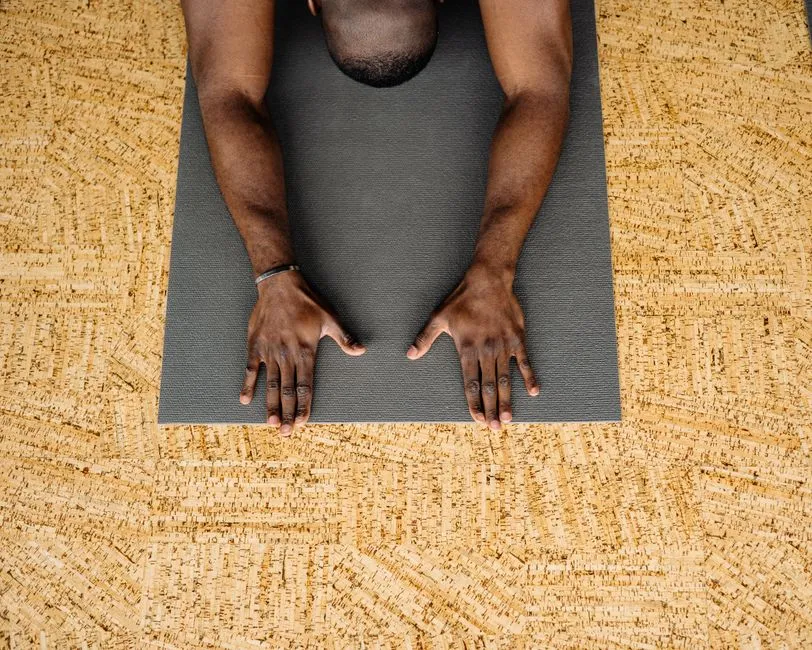
Place a dense couch cushion, two firm pillows, or a low stack of folded blankets lengthwise on the mat. Come to hands and knees with the support in front of you. Widen the knees only as far as comfortable and bring the big toes toward each other if the ankles permit.
Send the hips back partway and lower the front of the torso onto the support. Turn the head to one side, changing direction halfway through, or arrange enough height that the forehead rests neutrally. Add a folded blanket between calves and thighs or beneath the knees if that reduces pressure.
The torso should be supported before you relax weight into it. If the head drops, the abdomen feels compressed, or breathing becomes restricted, add height or leave. If knees, hips, or ankles object, choose side-lying rest instead. Child's Pose is popular, not universally restful.
Keep the arms beside the support, hug it, or rest forearms forward. Avoid reaching so far that the shoulders must work. Begin with about a minute.
To exit, place hands beneath the shoulders, press up, and come to hands and knees. Move one joint at a time. Do not fling the torso upright after being still.
Setup 4: seated chair-supported fold
Sit toward the front of a stable chair with feet supported on the floor. Place a second sturdy chair in front of you, facing you, or position yourself at a stable table. Stack folded blankets or pillows on the support until your forearms can rest without dragging the shoulders down.
Hinge forward from the hips a small distance and place the forearms on the support. Cross the arms and rest the forehead on them only if the neck and breathing remain comfortable. Otherwise keep the head upright and simply lean through the forearms.
The second chair should not slide toward you. Secure it against a wall or have all four feet firmly planted on a grippy surface. Do not lean onto a folding tray, glass-topped table, wheeled chair, or furniture of uncertain stability.
Keep weight in the sitting bones and feet. This is not a mission to put the chest on the thighs. Add height until the back, neck, and abdomen feel uncompressed. Stay for several easy breaths.
To exit, press through the feet, lift the torso using the hands on the thighs or chair, and pause upright. This option avoids getting down to the floor and may suit a short workday reset, although it does not medically cancel the email that caused the workday.
How long to stay
There is no compulsory restorative duration. Start with one or two minutes in a new setup. Sensations change after settling, and a position that felt neutral on entry may become numb, intense, or emotionally uncomfortable.
Use a quiet timer if time matters. Staying longer is not inherently more restorative. Leave while you can transition with control. If you fall asleep easily, choose a setup from which an unexpected nap will not leave you balanced on props or with circulation compressed.
Between positions, move fingers and toes, bend and straighten limbs gently, and pause. Standing quickly after lying down may cause light-headedness. Roll to one side and rise in stages when possible.
Props should remove work
Scan the jaw, hands, abdomen, and toes. If they are gripping, identify what they are trying to stabilize. The support may be too low, too soft, too narrow, or too far away.
Add height rather than pulling yourself deeper. Bring support to the body rather than forcing the body to reach it. If no arrangement feels easy, choose ordinary sitting or lying down. Rest does not require Sanskrit documentation.
Yoga blocks can provide firm, precise height, but they are not comfortable under every body part. Our guide to using yoga blocks explains their stable orientations and limits. A wall or chair is also a better modification than blocks for many loaded poses, including the versions in Downward Dog for beginners.
Finish without grading the result
After the last setup, sit or stand slowly. Notice one concrete detail: perhaps the breath is quieter, the shoulders feel the same, or you discovered that the blue pillow is a traitor. No specific sensation has to appear.
Restorative practice does not promise to heal an injury, fix sleep, regulate hormones, detoxify anything, or replace care. It offers a structured way to spend a few minutes in supported, low-effort positions. That modest promise is useful precisely because it can be kept.